How Natural Light Transforms a Myanmar Model Portrait
Myanmar-model.net works as a living archive of photographs: magazine covers, location fashion shoots, traditional dress portraits and celebrity galleries, arranged by popular and latest posts, tags and model names. Each published frame also preserves a record of a lighting decision, whether that was planned in a studio or caught in a street, a hotel room or an open courtyard.
Daylight is the most portable tool in a portrait photographer's kit. Direction decides the shape of a face, hardness decides whether skin looks sculpted or smoothed, and colour temperature decides whether a garment reads as silk, cotton or metal. None of it arrives automatically; it is negotiated with shade, weather, time of day and whatever surface happens to be nearby.
Reading the archive as a set of lighting case studies makes those negotiations visible. The same model photographed in a Yangon stairwell, on a Mandalay riverfront and beside a Sydney sandstone wall will tell three different stories, and comparing them is the fastest way to understand why a frame succeeds.
Australian readers already know this terrain. The country shoots fashion outdoors through every season, deals with extreme summer UV, navigates the southern hemisphere sun path and trades on a visual language built around sunlit skin, ochre earth tones and beach light. The parallels are strong, though the latitude gap between Yangon and, say, Melbourne changes several of the rules.
The light already written into the archive
Every entry carries an accidental weather report. A cover shot in afternoon Yangon sun reads differently from the same outfit under monsoon cloud, and the difference shows in the shadow line beneath the jaw, the sheen across a shoulder and the saturation of the background wall. That contrast is what makes the archive valuable for study: outcomes rather than instructions.
A consistent three-part reading works well. First, direction: was the light frontal, side-on or behind the subject? Second, quality: hard-edged, dappled or fully diffused? Third, colour: neutral at midday, amber near the horizon, green under a tree canopy, cool and flat under overcast skies? Applied across a model's tagged collections, these questions turn a fashion gallery into lighting evidence.
Because the site is an editorial image archive rather than a booking service, the comparison stays honest. There is no photographer's sales pitch between the frame and the viewer, only the finished image and the conditions implied by it.
Window light in Yangon interiors
The interior portraits in the archive are often the most instructive. A typical Yangon studio means a tall shuttered window, a white or cream wall, a sheer curtain and, during the wet season, a sky that holds the same pale grey for days on end. Light entering from one side at that softness gives skin a gradual falloff, a gentle shadow beside the nose and almost no texture on the forehead.
Latitude rewrites the usual advice. Yangon sits near 16.9 degrees north, close to the tropics, so the sun climbs steeply and can pass almost overhead in the spring months. North-facing openings catch steadier, more indirect light, while south and west faces deliver hot, harder shafts around midday. In the archive's hotel and apartment location shoots, subjects routinely turn a few degrees away from the glass so the window side stays modelled rather than flattened.
The evidence sits in the catchlights and the shadow density. Square catchlights point to a bare window; rounded ones suggest diffusion. Where the shadow under a cheek is dense but not black, a pale wall or reflector was doing the work of a second lamp.
Golden hour on riverbanks and coastlines
The outdoor collections show daylight at its most generous. Bagan's dusty plain, the Mandalay riverfront, the Ngwe Saung shoreline and Yangon's older quarters all feature that low-angle sun, sitting perhaps one or two degrees above the horizon, filtering the atmosphere into amber and pushing shadows metres long across the ground.
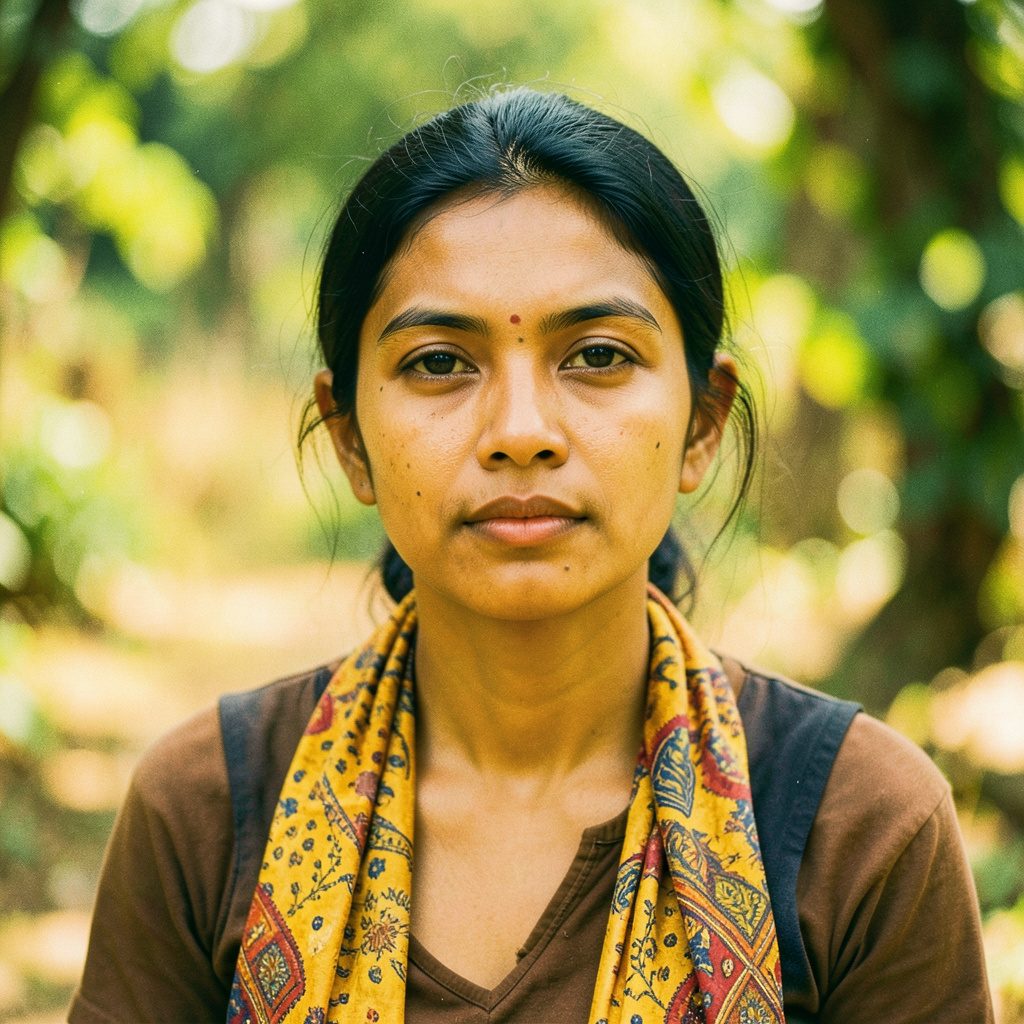
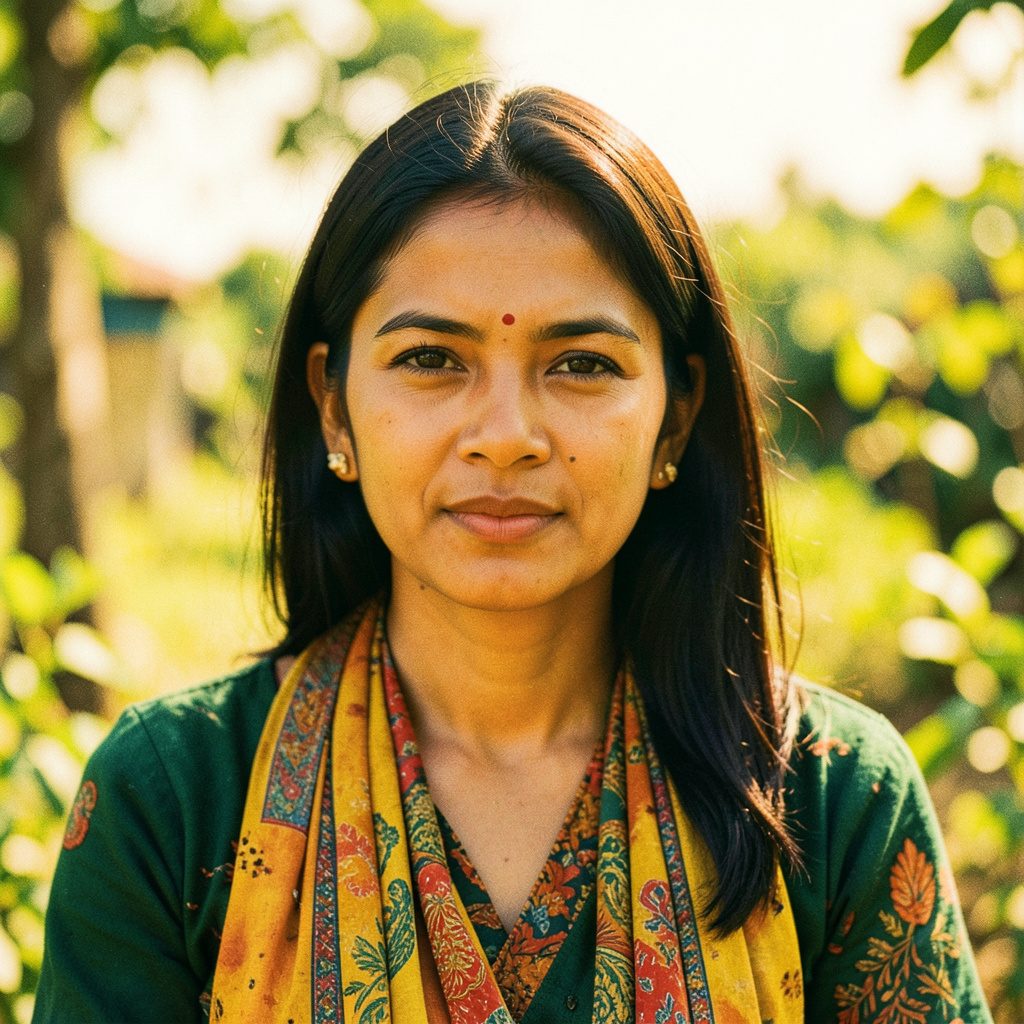
Backlight is the signature of these frames. Hair catches a halo, the edge of a silk sleeve lights from behind, skin appears to glow from within, and airborne dust or sea spray becomes visible as a texture that midday sun erases. Exposure is usually pulled down a stop or more to protect the sky, with shadows lifted later during editing.
Set one of these backlit frames beside an interior window portrait and the difference is immediate. Low sun wraps and rims; window light models. One describes outline and shape, the other describes volume, and fashion covers generally need both before they settle on one.
Harsh sun, open shade and Australian parallels
Yangon's late-morning sun is unforgiving. Vertical light carves deep lines beside the mouth, blows out pale fabrics and turns skin waxy in a single frame. The archive's strongest outdoor work tends to come from open shade: under an awning, behind a stairwell wall, beneath a tree canopy or during a brief monsoon downpour that flattens the sky into a giant softbox.
Australians live inside a version of this condition every year. Sydney's summer UV index regularly reaches extreme levels, forcing shoots toward morning or late afternoon. Melbourne delivers cloud and clear sky in the same afternoon; Brisbane's subtropical light arrives bright and nearly overhead; Perth's coastal glare bounces off the Indian Ocean; Adelaide's dry heat bleaches the sky to near white. The sun path also reverses: in Sydney, Melbourne and Perth the sun crosses the northern sky, so north-facing windows provide steady, controllable daylight, the opposite of the European rule of thumb.
The local market reflects those constraints. Department store campaigns for Myer and David Jones, homegrown surfwear and activewear labels, and summer resort shoots all lean on open shade and short sessions, because hard vertical sun accentuates every line beneath the eye.
Silk, thanaka and reflected colour
Traditional dress portraits give the light a second job. A silk htamein, a hand-woven longyi, a folded pike umbrella and layered festival finery each demand a different source: silk needs a narrow, angled beam to reveal its sheen, while matte cotton holds its weave better under softer, more frontal light. When a garment reads flat in an archive frame, the lighting plan was usually too broad or too even.
Bounce is the quieter story. Gold leaf, lacquerware, maroon and cream textiles, pale teak floors and painted doorways all return colour into the shadows. A red door fills a shaded cheek with warmth. A white wall gives neutral, flattering fill. Foliage cools skin toward green; a beach at low sun pushes everything toward gold.
That warm earth palette travels comfortably into Australian fashion, where sandstone, eucalyptus grey and red outback soil already dominate local brand imagery. Shoot the same silk in a Red Centre setting and the reflected ochre does half the styling work.
Cover frames and the magazine crop
A magazine cover is a harder brief than a gallery portrait. It must hold at thumbnail size, survive a newsstand's fluorescent tube, and leave the masthead a clean field to sit against. Daylight offers two reliable paths, and the archive shows both in use.
The first is the broad soft source: monsoon cloud or a north-facing window, giving even skin, readable texture and a calm background that lets typography breathe. The second is controlled contrast: bright shade with a strip of direct sun, or a backlit subject separated from a glowing river or sky, which produces drama and sharp subject edges for a cover line.
The site's tag structure lets readers follow either path across models and shoots, and the finished frames also reveal the post-production choices: skin lifted slightly toward neutral in bright shade, highlights recovered in silk, background warmth graded away from a green cast.
Field notes for readers of the archive
Before attempting a session of your own, it helps to read the archive with the same questions the photographs answer.
What to check in the archive
- Whether catchlights are square, round or absent, and what that says about the source
- How far the shadow line falls from the jaw, which indicates hardness
- Whether colour leans cool, neutral or amber, and the hour that would explain it
- Which surfaces sit close enough to have bounced colour back into the subject
What to plan for on the day
- Scout the nearest north-facing window and mark where the sun falls by mid-morning
- Time an outdoor session for late afternoon, with a shaded backup position
- Carry a white card, a small reflector and a lens cloth for dust and sea spray
- Watch the sky, because a passing monsoon cloud can end a hard-light session in seconds
Choose one frame from the latest posts, work out the hour and weather its light implies, and book a single trial session beside your nearest north-facing window at that same time of day.